
May 27
What I Wish I Knew About Working in International Development
A career in international development is one people plan carefully — and still feel unprepared for. Here's what the preparation usually leaves out.
You spent years preparing for this.
The degree. The internships. Maybe a language course or two, a volunteer placement that cost more than it paid — but everyone said you needed the field experience, so you went. And then you got in.
And somewhere between your first real assignment and your third project cycle, something shifted. Not wrong exactly. Just — complicated in ways nobody had prepared you for. Like you'd been handed a map to a place that had already changed.
Here's what I've come to think: there are things you learn about international development. And there are things you only learn once you're inside it. This article is about the second kind.
What They Tell You Before You Enter the Sector
Most people entering this sector were handed a version of the same narrative.
Find your why. Match it to a technical specialty — public health, food security, humanitarian response, education. Get the right degree, ideally a master's from a reputable institution. Do some field work. Build a network. And then build a career doing work that actually means something.
The sector is hard to break into, yes — but once you're in, the rewards are real. The work is purposeful. You're part of something larger than yourself. And beneath all of it sits an implicit promise: your ideas will matter. The evidence you gather will shape the decisions that get made. Your commitment to the mission will carry you through the difficult days.
Parts of this are true. But it leaves out almost everything you actually need to know before you show up.
What Working in International Development Actually Looks Like

Three things emerge consistently when practitioners speak honestly about how the sector works — not how it presents itself, but how it actually operates.
The entry barriers are real, and they are not neutral.
The sector routinely expects entry-level candidates to arrive with three to four years of experience — a catch-22 that locks out large numbers of qualified people before they ever get started. What the standard career advice rarely mentions is that these barriers fall hardest on people from the Global South. Even with the right credentials, the right experience, and the right language skills, someone from the "wrong place" may still find themselves being told how to do development rather than being invited to lead it. The passport you carry shapes your trajectory in ways that have very little to do with the quality of your work.
The sector routinely expects entry-level candidates to arrive with three to four years of experience — a catch-22 that locks out large numbers of qualified people before they ever get started. What the standard career advice rarely mentions is that these barriers fall hardest on people from the Global South. Even with the right credentials, the right experience, and the right language skills, someone from the "wrong place" may still find themselves being told how to do development rather than being invited to lead it. The passport you carry shapes your trajectory in ways that have very little to do with the quality of your work.
Once you're inside, the sector's internal culture often contradicts its stated values.
Research across multiple countries has documented a dual salary system in which local staff are paid significantly less than expatriate colleagues — sometimes for doing identical work with equivalent qualifications. In some Pacific countries, practitioners themselves have described this arrangement as "economic apartheid." That phrase is striking. And it should be — because it names a profound irony: a sector built on poverty reduction, reproducing poverty-generating inequality within its own walls. These aren't anomalies. Researchers have traced them directly to broader colonial dynamics of power and privilege that the sector has inherited and never fully addressed.
Research across multiple countries has documented a dual salary system in which local staff are paid significantly less than expatriate colleagues — sometimes for doing identical work with equivalent qualifications. In some Pacific countries, practitioners themselves have described this arrangement as "economic apartheid." That phrase is striking. And it should be — because it names a profound irony: a sector built on poverty reduction, reproducing poverty-generating inequality within its own walls. These aren't anomalies. Researchers have traced them directly to broader colonial dynamics of power and privilege that the sector has inherited and never fully addressed.
The relationship between evidence, good ideas, and actual decisions is far messier than any training program suggests.
Practitioners consistently describe a gap between how international development is taught and how it really works — where donor priorities frequently override local needs, where politics shape resource allocation more than data does, and where best practices designed in one context fail to transfer to another. This isn't a fringe critique from outside the sector. It's what experienced practitioners say when they're being honest about how the system works.
Practitioners consistently describe a gap between how international development is taught and how it really works — where donor priorities frequently override local needs, where politics shape resource allocation more than data does, and where best practices designed in one context fail to transfer to another. This isn't a fringe critique from outside the sector. It's what experienced practitioners say when they're being honest about how the system works.
If you'd rather watch, the full video is below. Otherwise, keep reading.
The Inequality the Development Sector Doesn't Talk About
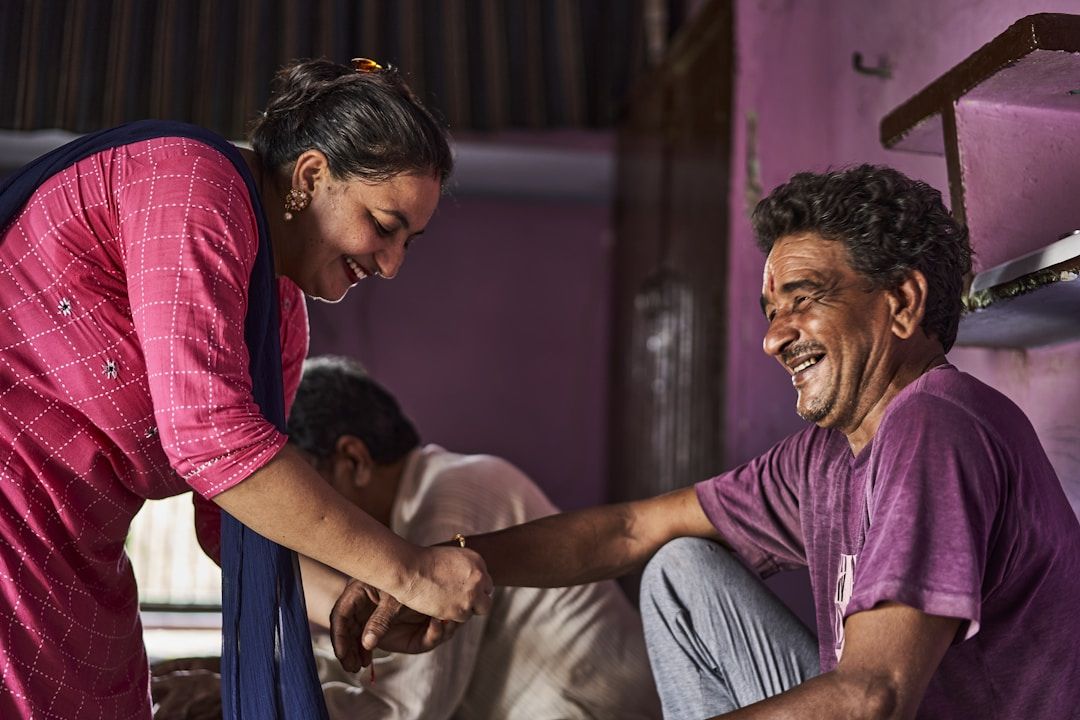
Here's the thing worth naming directly, because it sits underneath everything else.
What makes this particularly hard to navigate is that evidence alone doesn't automatically correct these dynamics. Evidence gets interpreted, funded, and acted upon inside the same power structures that produce the problem. When donor priorities conflict with local needs, it is rarely the evidence that decides the outcome.
The international development sector positions itself as a force for justice. For equity. For the rights and dignity of people living through poverty or conflict. Organizations publish values statements about inclusion, partnership, and locally-led development. These aren't cynical — most people in this sector genuinely mean what they say.
And yet the sector consistently reproduces, internally, many of the inequalities it exists to address.
There are documented cases of professionals with dual nationalities being assigned "local" salaries based on their passport — regardless of their actual background or cost of living. There is an unofficial ceiling that makes it structurally difficult for local nationals to rise to senior positions within organizations operating in their own countries. And this isn't simply a pay-scale problem. It lives in whose expertise is considered authoritative. Whose knowledge gets published. Who sits at the table when decisions get made.
What makes this particularly hard to navigate is that evidence alone doesn't automatically correct these dynamics. Evidence gets interpreted, funded, and acted upon inside the same power structures that produce the problem. When donor priorities conflict with local needs, it is rarely the evidence that decides the outcome.
How to Navigate the Gap Between the Ideal and the Reality
Most people enter this sector with genuine motivation — and that matters. But idealism becomes a liability when the sector uses it as a substitute for accountability. When passion for the mission becomes the reason not to interrogate the system you're operating inside of.
Because the system has its own logic. What gets called "white saviorism" isn't simply about individual attitudes — it's a power structure. One that positions certain people as more capable, more credible, more developed, and directs their energies toward communities framed primarily as recipients. And critically — this isn't only reproduced by white practitioners. It can be internalized and replicated across racial lines by anyone socialized into the same hierarchy.
Knowing this in advance doesn't protect you from it. But it changes how you interpret what you encounter. It also makes space for more honest motivations. Wanting a financially stable career, wanting intellectual challenge, wanting expertise that compounds over time — these are legitimate reasons to be here. The earlier you can be honest with yourself about the full picture of what you need from this work, the more sustainable your presence in it will be.
A Practitioner's Reframe: What This Work Actually Requires
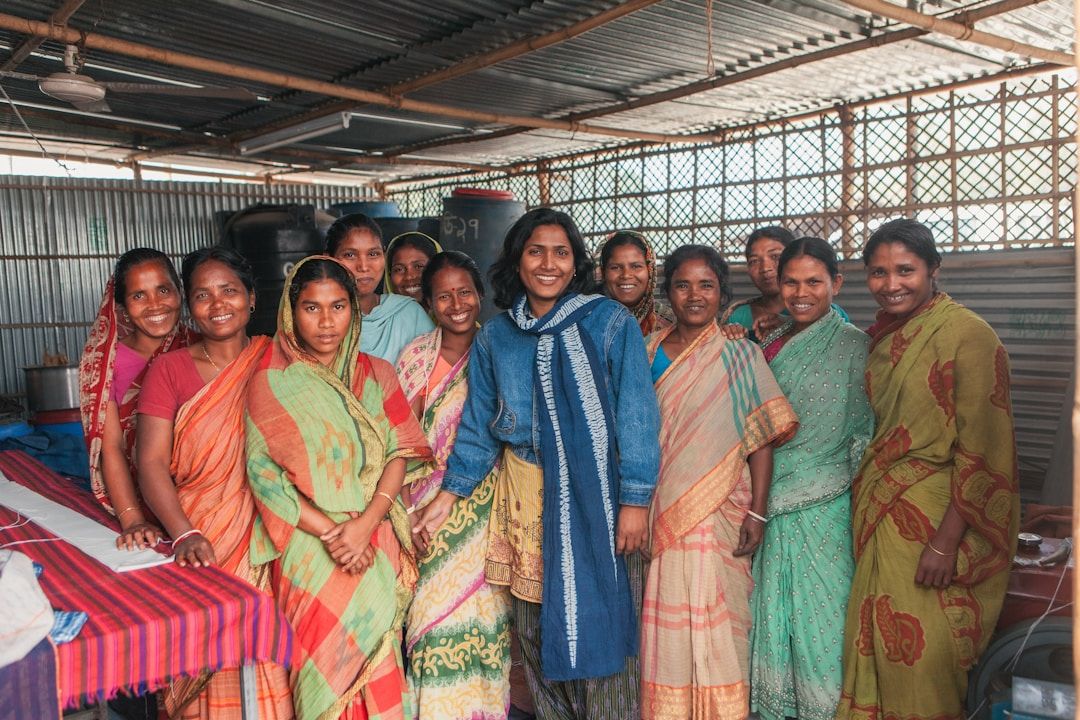
"What I wish I knew before working in international development" isn't a list of career tips. It's an ethical orientation toward the gap between what this work promises and what it actually requires.
The practitioners who navigate the sector most effectively — and most ethically — tend to share a few things in common. They understand that good intentions don't automatically produce good outcomes. That evidence matters but doesn't govern. That ambiguity isn't a sign something is wrong — it's inherent to the work. That impact is usually non-linear, hard to attribute, and collective rather than individual.
And they've made peace with the most important shift of all: from asking did this work? to asking what does working even mean in this context — and who gets to answer that?
If development is genuinely about expanding human capability, then the people it's meant to serve have to be more than beneficiaries. They have to be the ones defining what capable looks like.
Five Things That Actually Help When You're Starting an International Development Career

1. Learn the structural history before you learn the technical frameworks
Before you become fluent in logical frameworks and theories of change, understand how colonialism shaped the architecture of the sector you're entering. Read Dambisa Moyo on aid dependency. Read Teju Cole on the White Savior Industrial Complex. Read the growing scholarship by practitioners from the Global South on decolonizing international development. That historical context will make everything else make more sense — including the office dynamics that will otherwise confuse you.
Before you become fluent in logical frameworks and theories of change, understand how colonialism shaped the architecture of the sector you're entering. Read Dambisa Moyo on aid dependency. Read Teju Cole on the White Savior Industrial Complex. Read the growing scholarship by practitioners from the Global South on decolonizing international development. That historical context will make everything else make more sense — including the office dynamics that will otherwise confuse you.
2. Be honest about your positionality, and let that honesty do actual work
This means more than acknowledging privilege in a training session. It means asking: am I the right person to lead this, or the right person to support it? What do I bring that's genuinely needed — and where am I occupying space that a local expert should hold? These questions don't have permanent answers. But asking them consistently changes how you show up.
3. Build skills that compound — and know which ones actually matter in the field
What compounds over time is contextual judgment: the ability to read a situation that doesn't match any framework you were trained on. Ethical reasoning. Communication across power differences. The capacity to influence without formal authority. This is the kind of expertise that builds through project management for NGOs — learning adaptive, equity-centred frameworks rather than generic corporate tools. And above all — the ability to learn from people with direct experience of the problems you're trying to address. These are the skills that turn a technically competent practitioner into one who actually improves things.
4. Understand funding structures as a political reality, not just a logistical one
Donor priorities shape what gets measured, what gets resourced, and what gets reported as success. Understanding this early doesn't make you cynical. It makes you strategic — able to identify where there's genuine room to push, and where the constraints are structural rather than personal.
5. Take your own sustainability seriously
The idealism that brings people into this sector can become a liability if drawing limits starts to feel like a betrayal of the mission. Interrogate your organization's policies: whose contexts do they reflect? What assumptions are built in? These aren't abstract questions. They determine whether you can sustain the work — and whether the work, in its current form, is worth sustaining.
A Question to Leave You With
Think about the gap between what you were told this sector would look like — and what it actually looked like once you were inside it. What did that gap reveal about the sector's structures? About your own positioning within them? And what would you do differently if you were starting again?
For most people working in international development, that's not a hypothetical. It's the ongoing work.
An international development career can be deeply meaningful. But the most useful thing you can carry into it isn't a credential or a technical framework. It's the capacity to hold idealism and critical analysis in the same hand — to care deeply about what you're doing while staying honest about the system you're doing it inside of.
That kind of practitioner isn't naïve. They're not cynical either. They're something harder to produce and more valuable to the sector's long-term future: critically engaged, and committed to the kind of learning that doesn't stop when the training ends.
Keep thinking with us
If you're thinking about how learning actually happens inside teams, organizations, and systems — and how to do it more intentionally — the Learning Loop Guide is a free resource designed for exactly that.
Further reading
Created with