
Aug 19
/
Carol Lopez Lima
How Innovation Actually Happens in International Development
The sector talks about innovation constantly. The research tells a more uncomfortable story.
Walk into any international development conference and you'll hear the word within the first five minutes. Innovation. It appears in strategy documents, funding proposals, job descriptions, and panel titles with a frequency that implies everyone agrees on what it means and knows how to produce it.
Walk into any international development conference and you'll hear the word within the first five minutes. Innovation. It appears in strategy documents, funding proposals, job descriptions, and panel titles with a frequency that implies everyone agrees on what it means and knows how to produce it.
Innovation in international development has become one of the sector's most load-bearing words, asked to justify everything from technology pilots to organizational restructuring, while the question of what it actually means in practice quietly goes unanswered.
And the gap between the sector's enthusiasm for innovation and its actual capacity to implement it is one of the most consequential, and most quietly avoided, problems in development practice today.
The Definition Problem Nobody Wants to Name
Start with the basics, because even here the ground is less solid than it looks.
The Stanford Social Innovation Review, arguably the most cited source in this space, defines social innovation as the process of developing and deploying effective solutions to challenging social and environmental problems — requiring collaboration across government, business, and the nonprofit world. It's a reasonable definition. But notice what it leaves out: any acknowledgment that innovation can cause harm, that novelty doesn't automatically mean better, or that the social value of a new approach isn't self-evident just because someone calls it innovative.
The peer-reviewed literature is considerably more cautious. Researchers have been asking whether social innovation is always a win-win solution for real-world challenges — or whether it's increasingly a buzzword inside policy practice that papers over harder questions about power, resources, and who actually benefits. A sympathetic but critical reading of the concept, from a Springer volume specifically examining social innovation in context, emphasizes the importance of analyzing innovation against its actual conditions and avoiding the assumption that it is inherently good.
This isn't academic hairsplitting. When innovation is treated as self-evidently positive, organizations face pressure to appear innovative rather than to actually produce something new and effective. The SSIR has named this pattern directly: too many organizations embrace the latest approach — whether it's a contest, a crowdsourcing tool, or a technology platform — while their long-standing operating norms remain completely unchanged. An initial surge of excitement, followed by people gradually drifting back to business as usual. Year after year, across NGOs, social enterprises, philanthropies, and institutional donors.
Three Types of Innovation the Sector Collapses Into One
Part of the confusion is that "innovation" is doing the work of three very different things at once, and the research treats them separately for good reason.
Incremental innovation. The type the sector systematically undervalues
Incremental innovation is continuous improvement within existing systems — refining program designs, adapting delivery mechanisms, improving how monitoring actually works. This is what dominates actual practice. It is also what gets systematically undervalued, because it doesn't make for a compelling funding pitch or a TED Talk. The SSIR makes a blunt case: glorifying innovation as the answer to social and environmental challenges has led to well-intentioned efforts to grow the population of social entrepreneurs and innovators, at the direct expense of investment in established organizations that create value mainly through getting better at what they already do.
Frugal innovation and what resource constraint actually produces
Frugal innovation emerged from the Global South literature and addresses something the mainstream innovation conversation rarely grapples with honestly: what does it mean to produce high-impact solutions under severe resource constraints? The research shows that constraint isn't just a barrier to overcome, it can be a productive forcing condition. When capability, local data, and community narrative are tightly woven together, resource limitation drives a kind of continuous strategic renewal that well-resourced organizations often can't replicate. Quadruple-Helix partnerships, such as community makers, NGOs, universities, and local governments, build and refine solutions in fast feedback loops rooted in actual community knowledge, not imported frameworks. The implications for how the development sector actually allocates resources and ideas are more uncomfortable than the mainstream innovation literature tends to acknowledge.
Systemic innovation. The most ambitious type and the most sobering evidence
Systemic innovation aims to change entire systems rather than components within them. It's the most ambitious form, the one most frequently invoked in development strategy documents, and the one with the most mixed and sobering evidence base for actually being achievable at scale.
Knowing which type of innovation you're actually pursuing changes everything about how you resource it, how you measure it, and how honest you can be about what success would even look like.
If you'd rather watch, the full video is below. Otherwise, keep reading.
Why Innovation Doesn't Move in the Development Sector
While 80% of nonprofit leaders surveyed by The Bridgespan Group aspire to innovation, only 40% say their organizations are actually set up to do it. That gap is not a motivation problem. The sector is not short on creative thinkers or ambitious ideas. The gap is structural — and the research identifies where specifically.
Short funding cycles systematically punish experimentation. Development organizations accountable to donor reporting requirements cannot build the sustained organizational infrastructure that real innovation requires, because the cost of perceived failure in a funding relationship consistently outweighs the organizational benefit of learning from it. This is the same structural condition that explains why development projects fail in the same ways across decades and organizations: the accountability architecture rewards the appearance of progress over honest reckoning with what isn't working. USAID's own CLA framework acknowledges that development organizations tend to assume linear progress toward predefined goals, and that a systematic disconnect has always existed between that assumption and the reality of complex, adaptive program environments. Organizations in this position optimize for appearing innovative rather than becoming innovative. They learn to produce the vocabulary of innovation without changing the underlying incentive structures.
NGOs resist innovation most where it would matter most. A 2024 study examining technology innovation adoption across 20 NGOs found a revealing pattern: organizations adopt new approaches far more readily in fundraising and fund management than in program design and program delivery. The areas where innovation could most directly serve communities are exactly the areas where accountability stakes are highest and tolerance for failure is lowest. The institution protects itself at the expense of the people it exists to serve.
Evidence doesn't automatically become practice, even in evidence-based sectors. Research suggests it takes 15 to 17 years for evidence-based interventions to become standard practice. The delay isn't primarily technological. It's human: workflow misalignment, organizational inertia, and the absence of the routines needed to turn what someone learned into something the whole organization acts on. Building the learning infrastructure that actually shortens that gap is one of the most consistently underresourced priorities in the sector.
The Failure Culture Paradox in Development Organizations

The organizational psychology research is unusually consistent on one point: psychological safety, the shared belief that team members won't be punished for speaking up, taking risks, or making mistakes, is the single condition most reliably associated with organizational innovation. A meta-analysis of 94 independent studies found significant effects of psychological safety on both individual and team innovation behavior. Teams that feel safe to fail learn more, adapt faster, and generate genuinely new approaches at higher rates than teams that don't.
This is well established. It's also in direct structural tension with how most development organizations actually work.
A donor accountability architecture that punishes the appearance of failure cannot coexist with a genuine culture of learning from failure. These aren't values in tension, they're structural realities pulling in opposite directions. The sector knows this. It resolves the tension rhetorically, by talking about learning cultures while maintaining reporting systems that make failure invisible rather than instructive.
USAID's Collaborating, Learning, and Adapting framework is the most documented serious attempt to address this inside a large development organization. The evidence shows it works. Organizations that apply more adaptive leadership and data-driven learning practices do perform better than those that don't. But the honest reading of the CLA evidence is equally important: institutionalizing it at USAID required dedicated budget lines, leadership commitment sustained across years, and organizational scale that most NGOs and local organizations simply don't have.
There's a further complication the sector rarely names. Psychological safety has different effects in different cultural contexts. Research shows significantly stronger effects in Western organizational cultures than in others. This matters enormously for a sector deploying globally standardized organizational models, mostly designed in the Global North, across vastly different cultural environments. A failure culture that works in one setting can land as performative, threatening, or simply incoherent in another.
And failure tolerance without actual learning infrastructure produces nothing useful at all. A qualitative study of practitioners in a high-technology firm found that the organizations that genuinely learn from failure have specific routines in place: they capture what went wrong, circulate it, and build it into the next cycle. Acknowledging failure in a debrief and then continuing as before isn't a learning culture. It's a ritual.
Where Innovation Actually Emerges and Who Authors It
The frugal innovation literature contains what may be the most important finding in this entire body of research, and also the one most at odds with how the sector tends to think about itself.
The strongest cases of innovation under resource constraint share one enabling condition: deep rootedness in community networks that provides both the problem definition and the quality control that formal development organizations typically lack. A longitudinal study of frugal entrepreneurs in the Global South found that the most successful ones mobilize resources through social embeddedness and non-market logics. Community relationships substituting for the financial and institutional resources that formal innovation systems assume you have.
This directly challenges the standard development model, in which innovation is designed by external experts and delivered to communities, rather than emerging from community knowledge and refined in genuine collaboration with technical expertise. The development sector has spent decades arguing, in policy documents, for community-led approaches. The innovation literature suggests that community-led approaches are not just ethically preferable, they are empirically more effective at producing ideas that actually survive implementation. The communities are not the beneficiaries of innovation. In many of the strongest cases, they are its authors.
What the International Development Sector Still Gets Wrong About Innovation
Three gaps in the evidence deserve naming directly, because they reveal where the sector's self-understanding remains most incomplete.
The geographical blind spot: frugal innovation evidence is concentrated in India and China
The frugal innovation literature is built primarily on cases from India and China. Frameworks for innovation under resource constraint, the contexts most relevant to development work, rest on a narrow empirical base that may not generalize to sub-Saharan Africa, Southeast Asia, or Latin America, which is precisely where development organizations most need them.
The measurement gap: the sector cannot yet assess whether its innovations actually work
Despite the sector's enthusiasm for innovation, it has not built adequate tools for measuring whether innovations produce the outcomes claimed. Current scholarship hasn't established comprehensive frameworks for assessing social innovation impact. Without that, the sector cannot distinguish genuine innovation from its performance, and investment in innovation capacity remains essentially faith-based.
The voice gap: grassroots innovators from the Global South are almost entirely absent from the record
The systematic literature on social sector innovation is dominated by accounts of innovation designed and evaluated by large organizations with global reach. The knowledge and experience of grassroots innovators, individuals and communities in the Global South solving development problems without institutional support, are almost entirely absent from the academic record. This is not a neutral omission. It reflects and reproduces the power asymmetry the sector's localization agenda claims to be addressing.
The Reframe
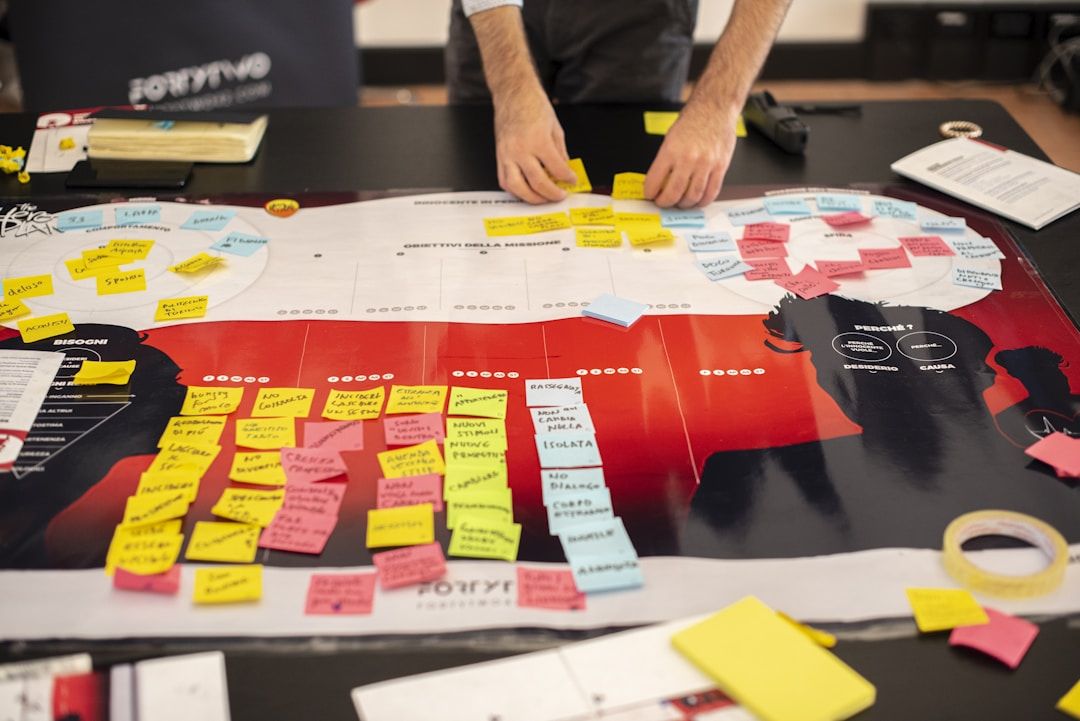
Innovation in international development is not primarily a creativity problem, a technology problem, or even a culture problem. It's an operating model problem, and the operating model is shaped by funding architecture, governance structures, and accountability relationships that organizations cannot change unilaterally, no matter how committed their leadership.
What this means practically: the question worth asking is not whether your organization is innovative. It's whether your organization has the structural conditions that allow good ideas to survive contact with implementation, like dedicated resources for iteration, aligned incentive structures, genuine tolerance for the kind of failure that produces learning rather than just loss, and relationships with the communities it serves that are deep enough to tell the difference between an idea that works in a presentation and one that works in a life.
Most development organizations have some of those conditions some of the time. Very few have built them into the operating model consistently enough to sustain what the research actually defines as innovation: not a brilliant idea, but a brilliant idea that reaches the people it was meant to serve, survives the encounter with reality, and keeps improving.
That's a much harder thing to build than the conference vocabulary suggests. It's also, the evidence is fairly clear, the only version worth building.
Keep thinking with us
If you're thinking about how to build genuine learning cultures inside organizations that weren't designed for them — how to create the conditions where good ideas actually move — the Learning Loop Guide is built for exactly that work.
If you're thinking about how to build genuine learning cultures inside organizations that weren't designed for them — how to create the conditions where good ideas actually move — the Learning Loop Guide is built for exactly that work.
Created with